
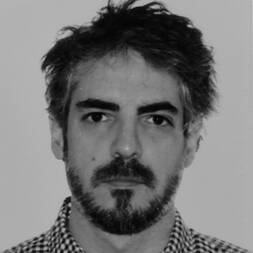
Gorka Zamora López
Biography
Senior research assistant, Center for Brain and Cognition, Dept. of Information and Communication Technologies, Pompeu Fabra University
Post-doctoral Research Assistant and Project Manager, The Human Brain Project
WEBSITE: www.Zamora-Lopez.xyz
Gorka Zamora-López studied theoretical physics at the University of the Basque Country (UPV/EHU), Spain, and biophysics at the University of Oulu, Finland. During his Ph.D. at the University of Potsdam he began an interdisciplinary journey at the cross-road between complex networks, neuroscience and dynamical systems, discovering the rich-club organization of brain connectomes in early maps of white-matter. Since 2013 he is a reasearcher at the Center for Brain and Cognition (CBC) of the Pompeu Fabra University, solving several methological matters for (brain) connectivity, the understanding of the structure-function relation in the brain's organization and delving into clinical research such as disorders of consciousness. As part of the Human Brain Project, for seven years, he combined the daily research with the coordination of technological solutions for scientific computational pipelines.
Emergence of modular and hierarchical neural networks driven by learning of external stimuli
In the last three decades the field of brain connectivity has explored the function of the white matter. Beyond the specialization of individual cortical regions, we have found that the cortex is organised into a modular and hierarchical architecture that supports the coexistence of segregation and integration of information. A prominent remaining question is to understand how the brain could possibly evolve into such a network. Here, we give a first step into answering this question and propose that adaptation to various inputs could have been a relevant driving mechanism. To illustrate that, we develop a model of (quadratic integrate and fire) spiking neurons, subjected to stimuli focalised on different populations. We find that only the combination of Hebbian and anti-Hebbian inhibitory plasticity allows the formation of stable modular organization in the network. To add further biological plausibility, our model continues "alive" after the entrainment, setteled into an aysnchronous irregular dynamics. We find that the emergence of spontaneous memory recalls during this resting-state activity is crucial for the long-term consolidation of the learned memories.