
Jesús Cortés
Biography
Full Professor at Ikerbasque, Computational Neuroimaging Lab, BioBizkaia Health Research Institute, Hospital Universitario Cruces, Barakaldo, Spain
WEBSITE: https://www.jesuscortes.info
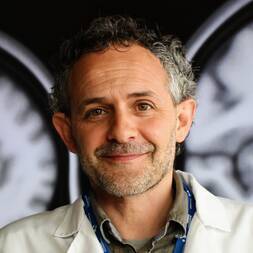
Dr. Jesus M. Cortes, Full Professor at Ikerbasque and head of the Computational Neuroimaging Laboratory at the BioBizkaia Health Research Institute, has an interdisciplinary background in the field of neuroscience, integrating brain connectivity, neuroimaging, clinical and neurophysiological data, and advanced techniques in machine learning and Artificial Intelligence. Dr. Cortes has secured funding exceeding 8.10 million EUR and has led 13 of the 35 research projects in which it has been involved. Dr. Cortes has published 115 scientific articles, 90% of which are ranked in the first quartile of the Journal Citation Reports (JCR Q1). He has supervised over 30 postgraduate students and delivered 102 scientific talks. His commitment to excellence and professional development is internationally recognized, with teaching contributions at 24 universities across six different countries. Awarded for his academic excellence and interdisciplinary approach, Dr. Cortes has received distinctions such as the "Premio Extraordinario de Doctorado" , Fulbright Fellow, EPSRC Fellow, and Ramón y Cajal Researcher. His recent appointment as Director of R+D in the cognitive stimulation platform NeuronUP has enabled the development of pioneering data-driven strategies for personalizing and optimizing neurocognitive interventions.
Multiscale Structural and Functional Brain Networks in Health and Disease
The precise relationship between brain structural and functional connectivities has puzzled leading researchers in network neuroscience. Despite numerous efforts, an accurate prediction of the structural connectivity from its functional counterpart remains a distant goal. This talk will focus on functional and structural networks derived from MRI, obtained through dynamics similarity in BOLD time series and white-matter tracts. Beyond comparing networks at the link level, a structure-function modular-coupling has demonstrated mutual benefits in comprehending brain structure and function. Our laboratory has made significant strides in this field, including the development of a brain partitioning technique that identifies network modules relevant to both structure and function [1,2]. We have applied this methodology to healthy individuals [3-8] and clinical populations, such as Alzheimer's patients [9], traumatic brain injury cases [10], and individuals with autism [11]. This talk will provide an overview of these studies, showcasing our multidisciplinary approach that integrates physics, complex networks, machine learning, and high-order interactions in brain networks.