
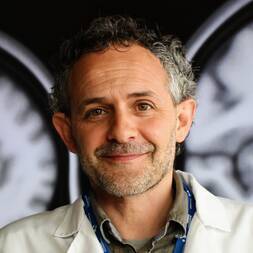
Paolo Bonifazi
Biography
Ikerbasque Research Associate, Biobizkaia Health Research Institute, Hospital Universitario Cruces, Barakaldo, Spain
WEBSITE: https://www.ikerbasque.net/paolo-bonifazi
Paolo Bonifazi is an Ikerbasque Professor at the BioCruces Health Clinic. He received a Master's in Physics from the University of Perugia (Italy) and a Ph.D. in Neuroscience from SISSA (Trieste, Italy). His research spans from fundamental to clinical neuroscience, emphasizing information processing and pathology in connection with circuit topology. Paolo combines in-vitro and experimental approaches, calcium imaging, multi-electrode recordings, patterned optogenetics, and immunochemistry, with computational and data science studies rooted in complex networks theory, information theory, and machine-learning classification analysis. He pioneered several mainstream notions in current neuroscience research, such as (i) the first evidence of GABAergic hub neurons (Science 2009); (ii) probing how astrocyte replenishment can restore connectivity and synchronization in dysfunctional networks (PNAS 2018), and (iii) demonstrating how acute inhibition of neuroinflammatory response via STAT3 pathway during epileptogenesis prevents GABAergic cells’ loss, reactive gliosis and imprinting of epileptic state (Brain 2023).
Linking hubs, embryonic neurogenesis, transcriptomics and diseases in human brain networks
In this talk I provide the basis for a multi-scale model of brain networks based on the neurogenesis time of the cerebral nodes, according to two major principles: “older gets richer” and “age preferential attachment”, both experimentally validated and inspired to the pioneering model on complex networks from Barabasi and Albert. This model bridges adult healthy human brain networks, to embryogenesis, and transcriptomics and its conclusions have been validated on the genetics underlying major brain pathologies including epilepsy. The link of the genetics underlying epilepsy (via STAT4) and the result of my last work (BRAIN, 2023) on prevention of epileptogenesis (via STAT3) will be presented.